By entering your email address you permit us to store and use your email for the purposes of marketing and communication with you.
_ All personal data is processed according to the IntellectEU Privacy Policy. You can withdraw your permission and require removal of your personal data any time by contacting us via email privacy@intellecteu.com or by pressing link Unsubscribe in any email received from us.
By entering your email address you permit us to store and use your email for the purposes of marketing and communication with you.
_ All personal data is processed according to the IntellectEU Privacy Policy. You can withdraw your permission and require removal of your personal data any time by contacting us via email privacy@intellecteu.com or by pressing link Unsubscribe in any email received from us.
IntellectEU
Sibos 2026: From standards and AI to blockchain in production
A look back at IntellectEU’s week in Miami, including our Sibos speaking sessions, discussions with DTCC, Rise & Tokenize, and the announce
From September 28 to October 1, IntellectEU joined the global financial community at Sibos 2026 in Miami for four days of discussions on payments, financial messaging, ISO 20022, AI, digital assets, and interoperability.
Our participation included two speaking sessions exploring the relationship between standards and AI and the move from blockchain experimentation to production. We also hosted Rise & Tokenize: Bridging Traditional and Digital Finance, an executive breakfast bringing financial industry leaders together to discuss the practical challenges of tokenization adoption and the transition from pilot initiatives to production. During Sibos week, we also announced our partnership with Aqua Global.
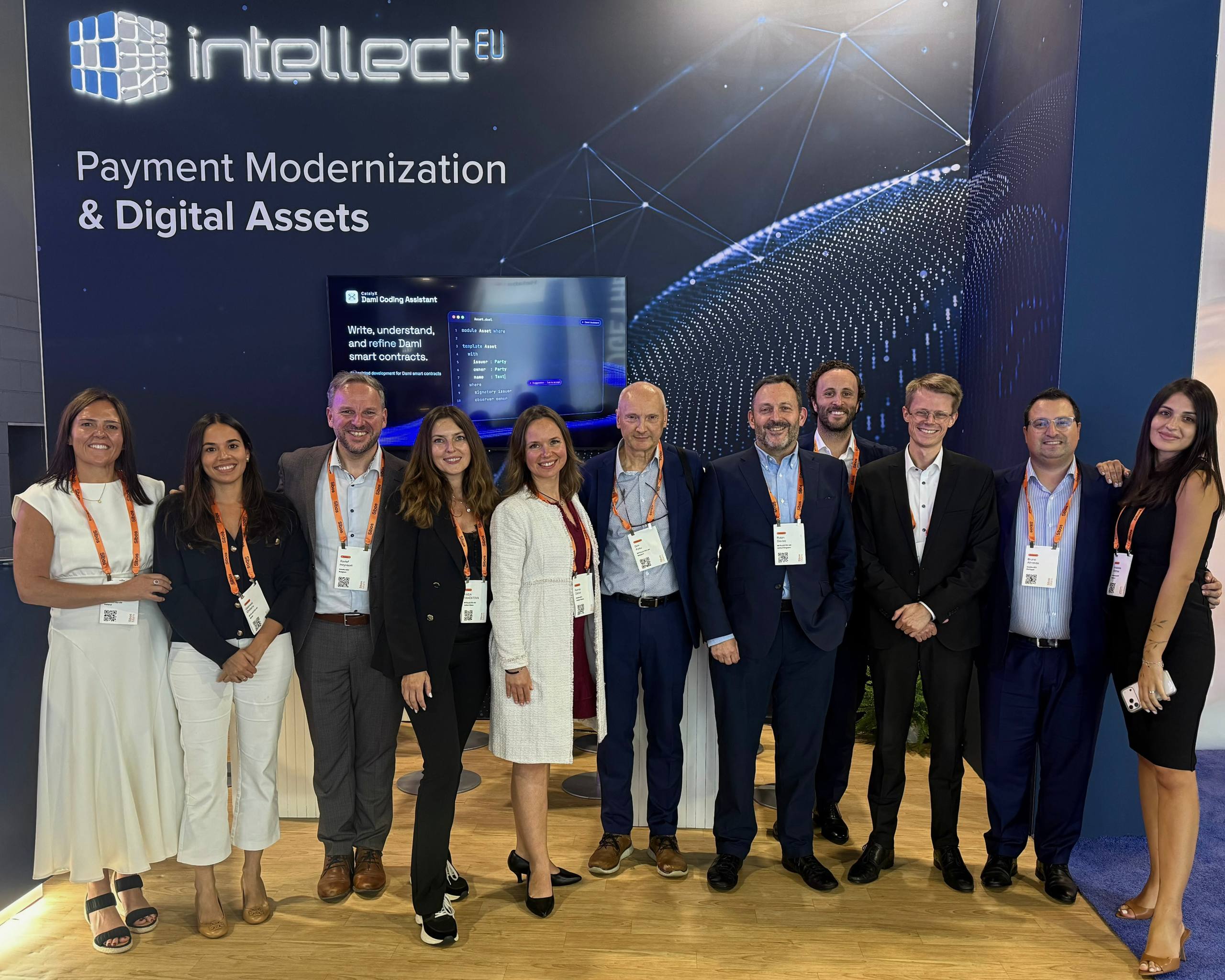
At Booth H035, our team met with financial institutions and industry partners to discuss payment modernization, financial connectivity, data quality, and the integration of traditional and emerging financial networks.
Here are the highlights from our week in Miami.
Can AI preserve meaning across financial systems?
On September 28, Xavier Heyvaert, Deputy Head of Payment Modernization & Swift at IntellectEU, spoke at the Sibos Standards Forum session, “From standards to systems: Can AI preserve meaning when ISO 20022 meets APIs and canonical models?”
The session examined how financial institutions can preserve the meaning of financial information as ISO 20022 messages interact with APIs, canonical models, and AI-driven systems.
Several important considerations emerged from the discussion. While ISO 20022 and emerging agent communication protocols provide foundations for exchanging information, the business canonical models needed to connect them consistently are still developing. Existing ISO 20022 standards do not yet fully capture the requirements of agent-initiated transactions, including supervision and liability. As autonomous agents become more involved in financial processes, these questions will require further attention.
The discussion also highlighted how interconnected payment rails, digital assets, and automated systems can amplify the consequences of data errors. An incorrectly interpreted field can introduce operational and compliance risks across connected processes. For AI applications, the distinction between plausible and correct outputs is particularly important. Preserving business meaning requires appropriate validation, controls, and governance rather than relying on technically valid transformations alone.
The central takeaway: As financial processes become increasingly automated, maintaining the accuracy and meaning of financial information is essential to managing risk and supporting reliable operations.
Blockchain: It's time for production
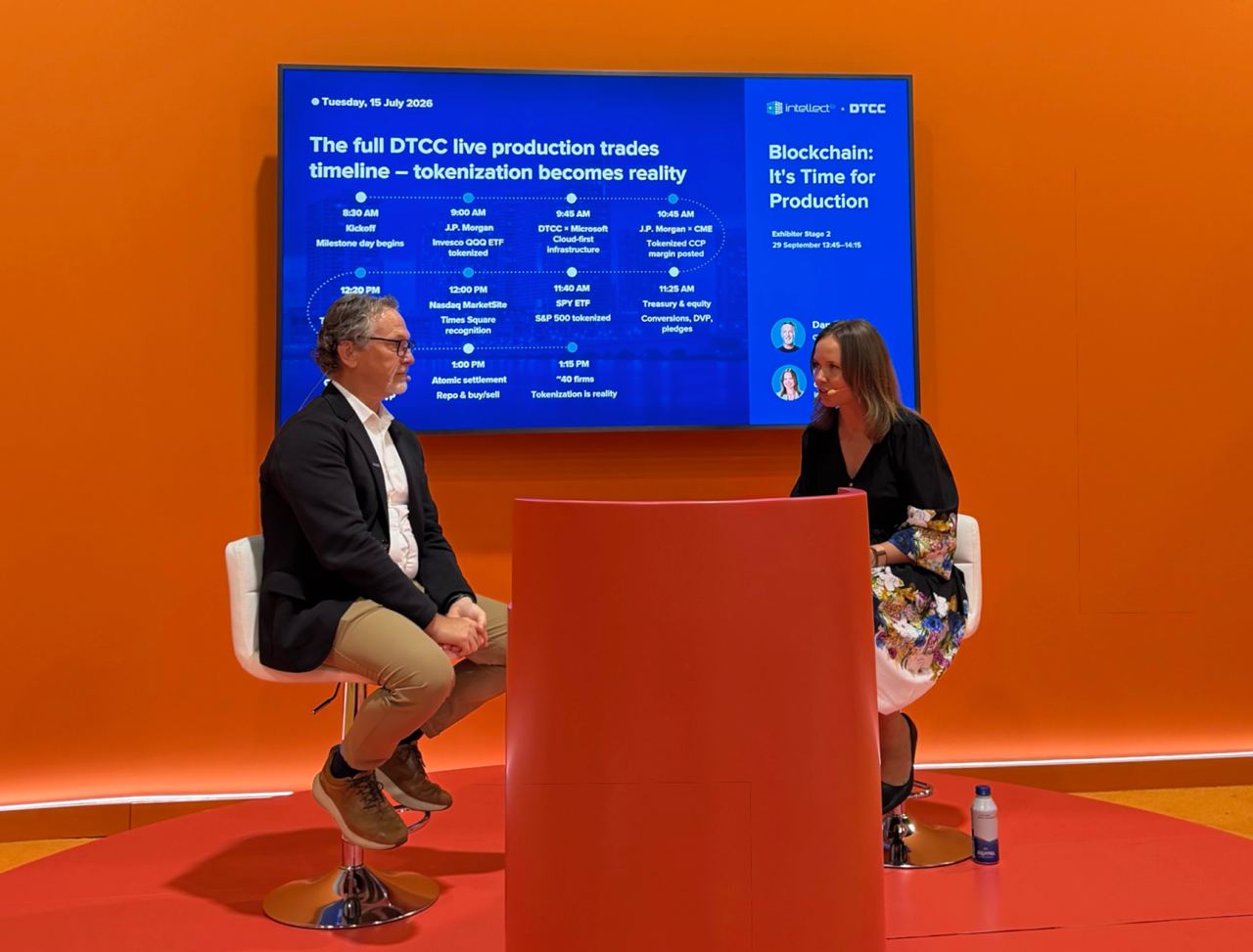
On September 29, Hanna Zubko, Co-Founder and CEO of IntellectEU Inc., joined Dan Doney, Managing Director and Chief Technology Officer at DTCC, for the Sibos Exhibitor Stage session “Blockchain: It's Time for Production.”
The discussion explored the transition of blockchain technology from experimentation into real financial market activity, drawing on examples of distributed ledger technology already being used in production.
Among the examples discussed was a July 15 transaction involving J.P. Morgan, which tokenized Invesco QQQ shares at 9:00 a.m. The securities were subsequently posted as margin at a central counterparty by 10:45 a.m.
Another example involved a live cross-border tokenized deposit initiative with 17 banks across six continents.
These developments provided practical examples of how digital assets and distributed ledger technology are being introduced into financial market operations. The discussion also addressed the requirements for broader adoption, including privacy, scalability, transaction throughput, interoperability across blockchain networks, and integration with existing financial infrastructure.
The central takeaway: Blockchain is already supporting production use cases in financial markets. The next challenge is enabling these capabilities to operate reliably at institutional scale and across existing financial infrastructure.
Rise & Tokenize: Bridging traditional and digital finance
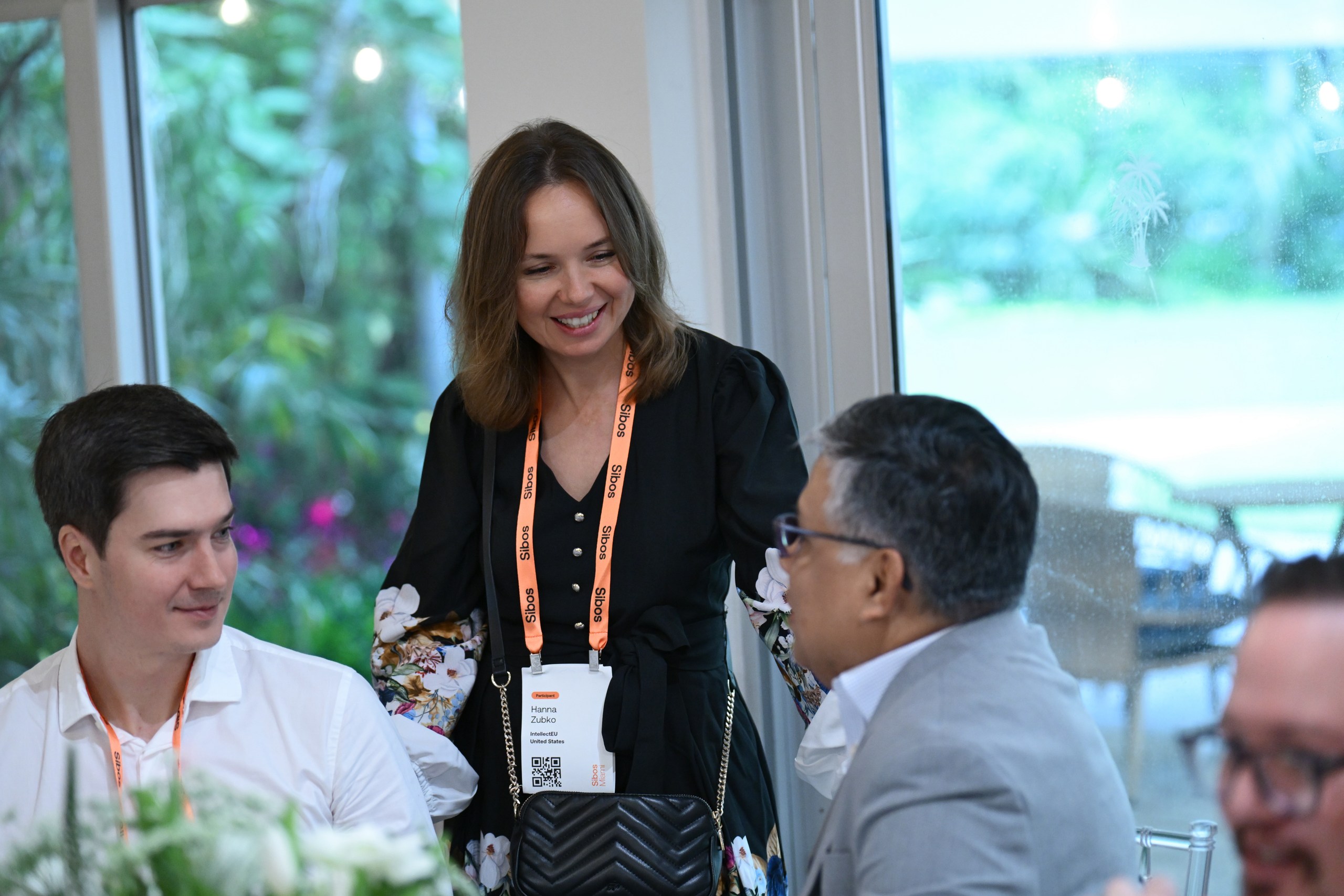
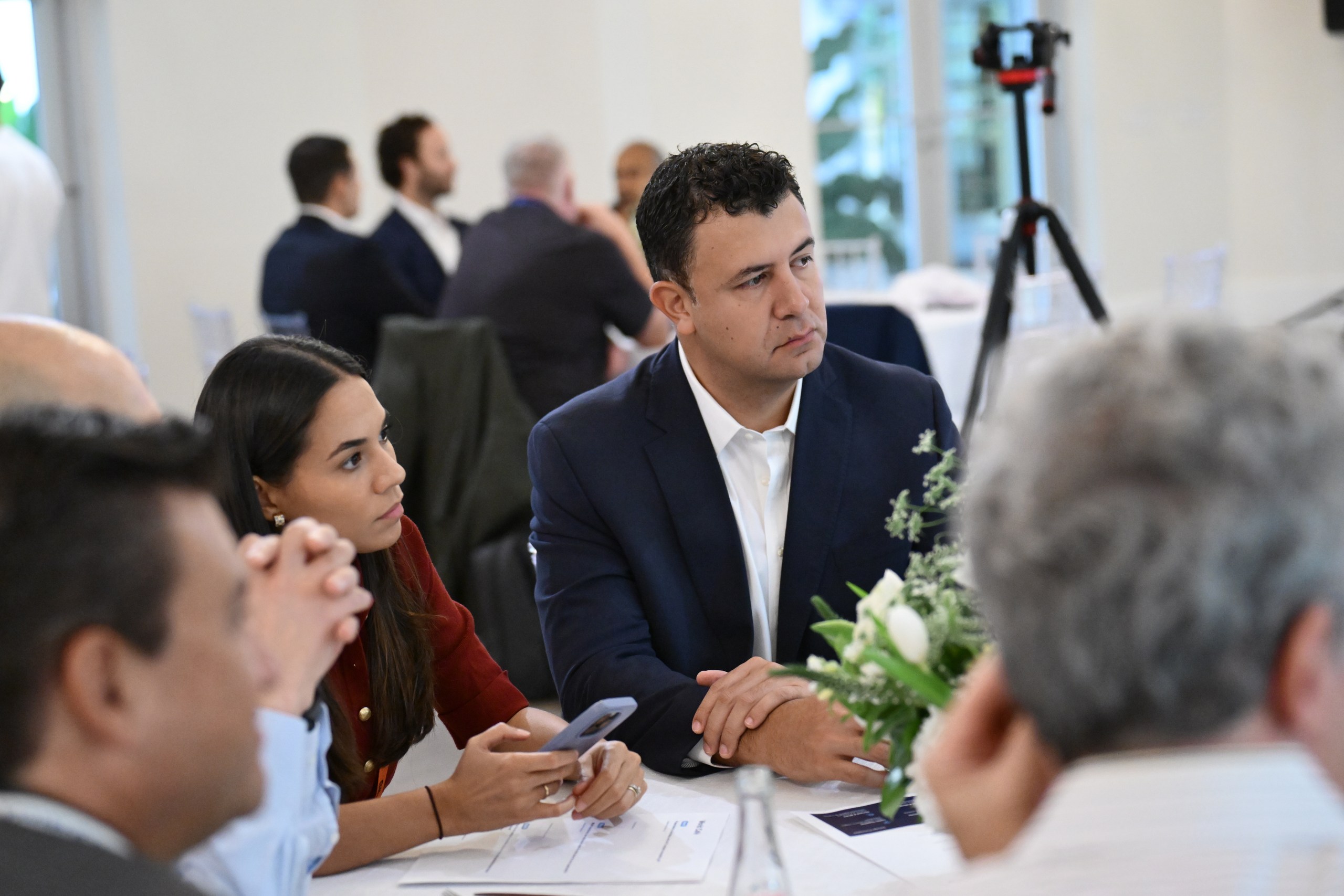
Beyond the Sibos conference program, IntellectEU hosted Rise & Tokenize: Bridging Traditional and Digital Finance on September 29 at the Miami Beach Botanical Garden. The executive breakfast brought together financial industry leaders to exchange perspectives on the next phase of tokenization adoption. The discussion was framed around one central question:
If tokenization is inevitable, why isn't it adopted everywhere yet?
The morning opened with Bruno Almeida, Head of Digital Assets & AI at IntellectEU, sharing perspectives on where tokenization stands today and the path forward. Participants then discussed their priorities, including identifying viable use cases, integrating new capabilities with existing financial systems, and understanding what is needed to progress from pilot initiatives to production.
If you are questioning which tokenization use case fits your business, try the CatalyX Tokenization Explorer. Enter your company name and get a tokenization business case in minutes, with use cases scored for your business and next steps to production.
A fireside conversation with DTCC
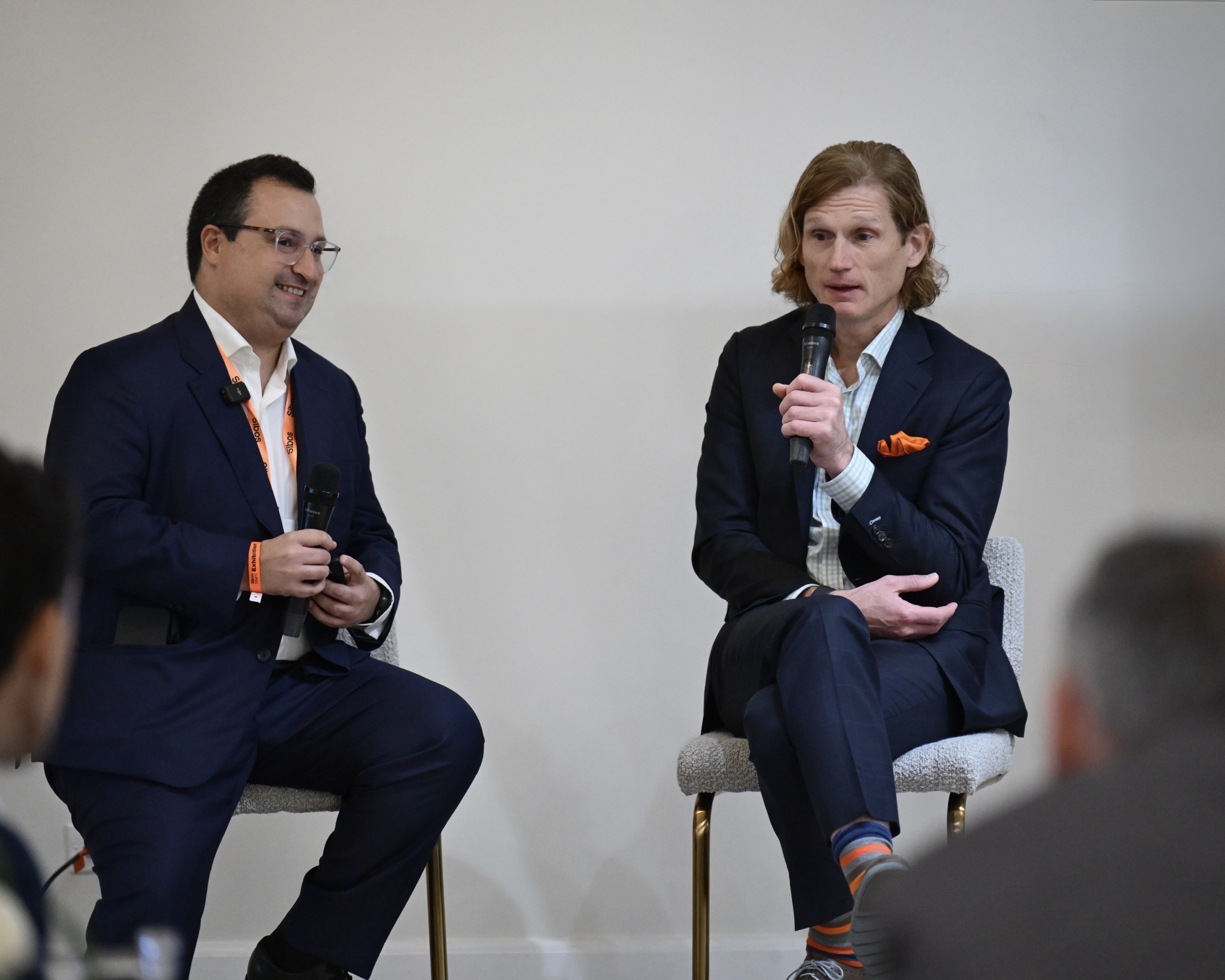
The event concluded with a fireside discussion between Bruno Almeida and Thomas Sullivan, Managing Director and Head of Digital Assets Solutions at DTCC. The conversation focused on the role of trusted market infrastructure in supporting tokenization and the requirements for scaling tokenized markets safely.
Across the morning's discussions, participants considered both the opportunities presented by tokenization and the practical challenges financial institutions must address to bring new capabilities into established operations.
Rise & Tokenize also marked the beginning of Connect by IntellectEU, a series of executive gatherings focused on the next phase of financial infrastructure. We look forward to continuing these conversations in 2027.
Supporting traditional and emerging financial networks
Throughout Sibos, IntellectEU's conversations at Booth H035 reflected the priorities financial institutions are addressing today. These included bringing digital asset and tokenization initiatives into production, evolving payment infrastructure, strengthening financial messaging and connectivity, and getting more value from ISO 20022 and financial data.
Through the Catalyst Product Suite, IntellectEU brings together enterprise integration, payments, financial connectivity, and AI-powered data intelligence capabilities.
A recurring theme in our Sibos conversations was multi-network interoperability. Financial institutions are increasingly looking at how to connect traditional payment infrastructure with APIs, blockchain networks, tokenized assets, stablecoins, and other emerging rails without creating additional integration silos.
The Catalyst Product Suite supports institutions in introducing an orchestration and integration layer across these environments, connecting back-office systems, financial messaging infrastructure, APIs, and new financial networks as their technology landscape evolves. Institutions can connect systems, orchestrate financial flows and APIs, improve data quality, and extend existing infrastructure without repeatedly rebuilding their technology foundations.
Within the suite, Catalyst Data Intelligence helps financial institutions transform unstructured address information into structured and hybrid formats, enrich payment data, and improve the quality of information used across payment processing and screening.
Designed for on-premise deployment, Catalyst Data Intelligence enables institutions to strengthen data quality while keeping sensitive data and models within their own environment. Better structured address data can also support greater automation, reduce manual intervention, and improve the quality of inputs used across payment operations.
Tokenization came up in many of our Miami conversations. If it is on your roadmap too, we are happy to help. With CatalyX by IntellectEU, we are one partner across the full digital assets lifecycle. We take institutions from their first validator to a live application, with the infrastructure, the operations toolkit and the connection into the systems they already run.
These capabilities reflect the broader focus of our discussions in Miami: how financial institutions can evolve their technology foundations while supporting both established operations and new financial networks.
Announcing our partnership with Aqua Global
During Sibos week, IntellectEU also announced its partnership with Aqua Global. The partnership reflects a shared focus on interoperability and financial connectivity, supporting the evolution of financial infrastructure. As institutions operate across established and emerging financial networks, interoperability remains an important consideration in how financial systems evolve. The announcement marked another milestone in IntellectEU's industry collaboration during Sibos 2026.
Continuing the conversation beyond Sibos
Sibos 2026 brought together discussions on the technologies and operational priorities shaping financial infrastructure. Our Standards Forum session examined the importance of preserving meaning and accuracy as AI interacts with financial messaging standards. The conversation with DTCC highlighted real blockchain production use cases and the requirements for institutional adoption. At Rise & Tokenize, industry leaders explored the practical challenges of bringing tokenization into established financial markets. Across our meetings and discussions, connectivity, integration, interoperability, and data quality remained important themes.
Thank you to everyone who visited IntellectEU at Booth H035, attended our speaking sessions, joined Rise & Tokenize, or connected with our team throughout the week. We look forward to continuing the conversations started in Miami.


.png)
.JPG)